Platform
RobotToolsSoftwareEcosystem
CustomersSelf-Driving LabsBlogCompany
Book a Demo
Book a Demo

Self-Driving Labs
for Biology

Book a demo

The future of research is autonomous labs. SDLs turn ideas into breakthroughs at a pace biology has never seen before.

Book a demo

Scroll to discover

Close-up of modular metal lab hardware designed for repeatable, automated experimentation

A Self-Driving Lab…

A Self-Driving Lab (SDL) unites full lab automation and Artificial Intelligence (AI) to create a continuous, closed-loop experimentation engine that generates an abundance of data and biological discovery.

01

Fully equipped and always ready

A Self-Driving Lab comprises of robots, lab devices, software, AI, and third-party integrations that create a closed-loop experimentation platform capable of running for long periods of time.

02

Biologist-led science with flexible paths

The biologist sets the goal, and the SDL builds and evolves the experimentation pathway, balancing human insight with AI-driven exploration

03

Reliable performance, continuous operation

The Self-Driving Lab operates with a high degree of reliability, ensuring that high-quality data is produced over days or weeks of continuous operation. 

04

Closed-loop learning that accelerates discovery

The SDL reviews data as it emerges from the experiment and uses AI to programmatically adjust factors like timing, temperature, reagent volumes, or culture conditions.

05

Results returned to the biologist

When the experiment is complete, the Self-Driving Lab provides a clear and comprehensive readout to the biologist. Biologists evaluate the data and determine the path forward.

Book a Demo

A Complete Platform

for Automated Biology

A Self-Driving Lab…

A Self-Driving Lab (SDL) unites full lab automation and Artificial Intelligence (AI) to create a continuous, closed-loop experimentation engine that generates an abundance of data and biological discovery.

01

Fully equipped and always ready

A Self-Driving Lab comprises robots, lab devices, software, AI, and third-party integrations that create a closed-loop experimentation platform capable of running for long periods of time.

02

Biologist-led science with flexible paths

The biologist sets the goal, and the SDL builds and evolves the experimentation pathway, balancing human insight with AI-driven exploration

03

Reliable performance, continuous operation

The Self-Driving Lab operates with a high degree of reliability, ensuring that high-quality data is produced over days or weeks of continuous operation.

04

Closed-loop learning that accelerates discovery

The SDL reviews data as it emerges from the experiment and uses AI to programmatically adjust factors like timing, temperature, reagent volumes, or culture conditions.

05

Results returned to the biologist

When the experiment is complete, the Self-Driving Lab provides a clear and comprehensive readout to the biologist. Biologists evaluate the data and determine the path forward.

Book a Demo

…Made for Biologists

Self-Driving Labs for biology are more than robots and AI. They must account for biological variation, adapt protocols as new data emerge, and experiment continuously without supervision. A new class of research infrastructure is needed to unlock an abundance of biological discoveries.

Illustration of a self-driving lab system monitoring biological conditions and adapting experiments in real timeIllustration of a self-driving lab using closed-loop data feedback to update experimental protocols over timeDiagram showing a self-driving lab system designed for fault tolerance and continuous experimental execution

Biologically aware by design

A Self-Driving Lab must sense and respond to biological changes that traditional automation can’t detect.
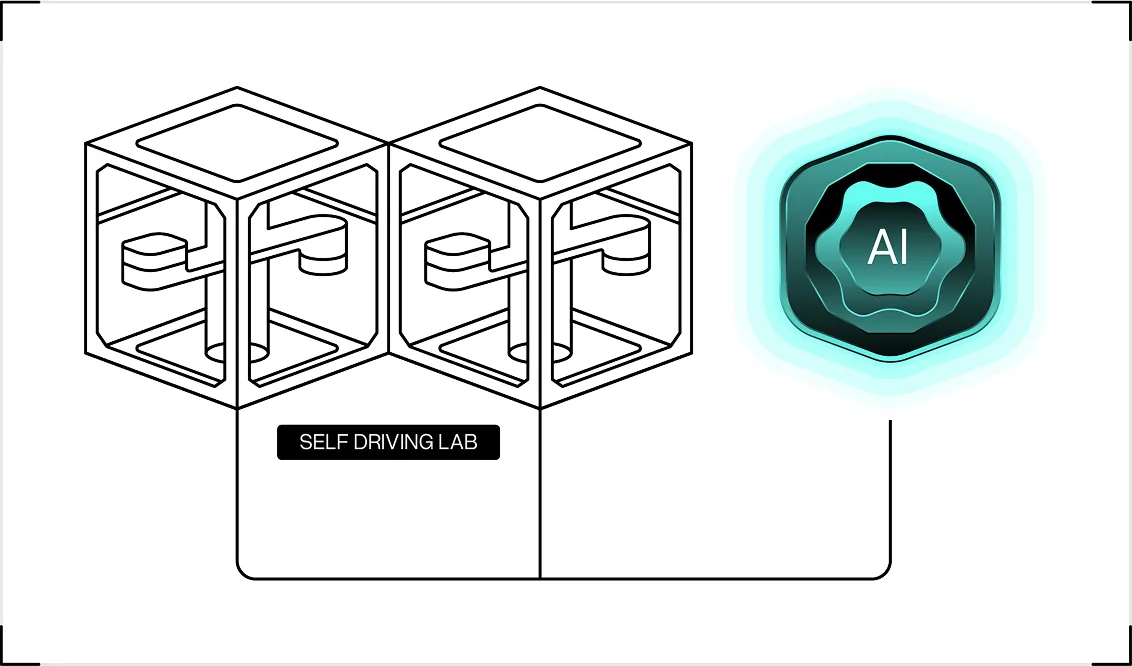
Illustration of a self-driving lab system monitoring biological conditions and adapting experiments in real time
01

Tracks evaporation, phase shifts, culture health, and more

02

Adapts in real time to protect experiment quality

03

Maintains accurate outcomes despite variation

Protocols that evolve with the data

Closed-loop experimentation adjusts research parameters in real-time so protocols evolve with new insights.
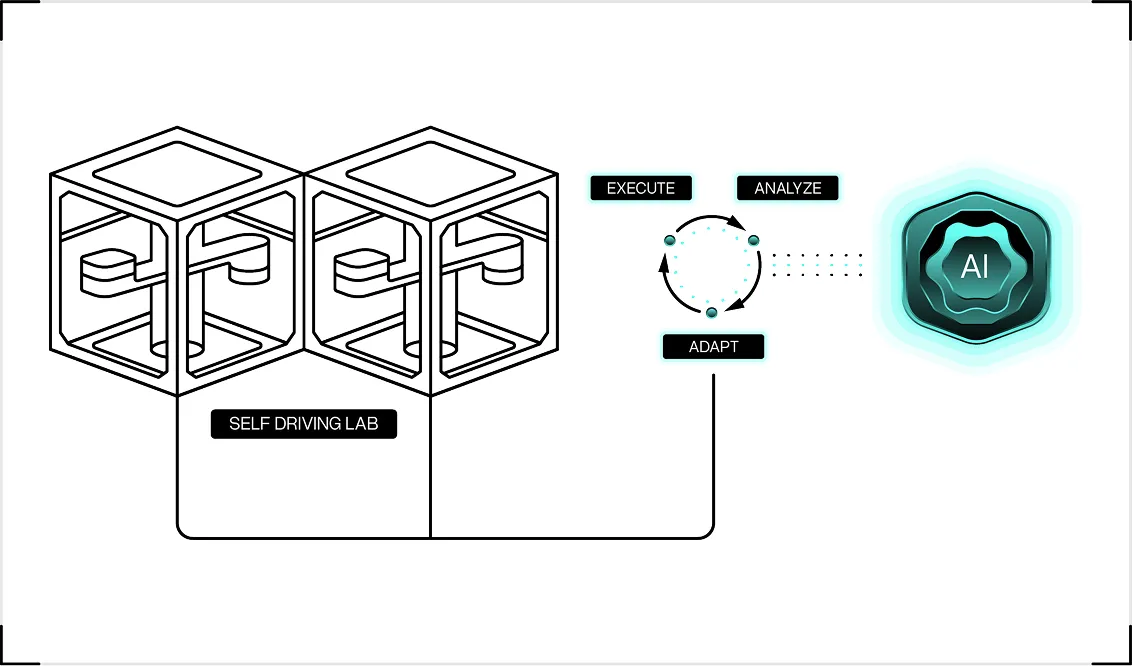
Illustration of a self-driving lab using closed-loop data feedback to update experimental protocols over time
01

AI updates timing, volumes, conditions, and steps

02

Adjusts within and across experiments as results emerge

03

Keeps protocols flexible instead of holding science back

Fault tolerance that supports continuous operation

Continuous, 24/7 automation requires systems that recover from failures and keep experiments running.
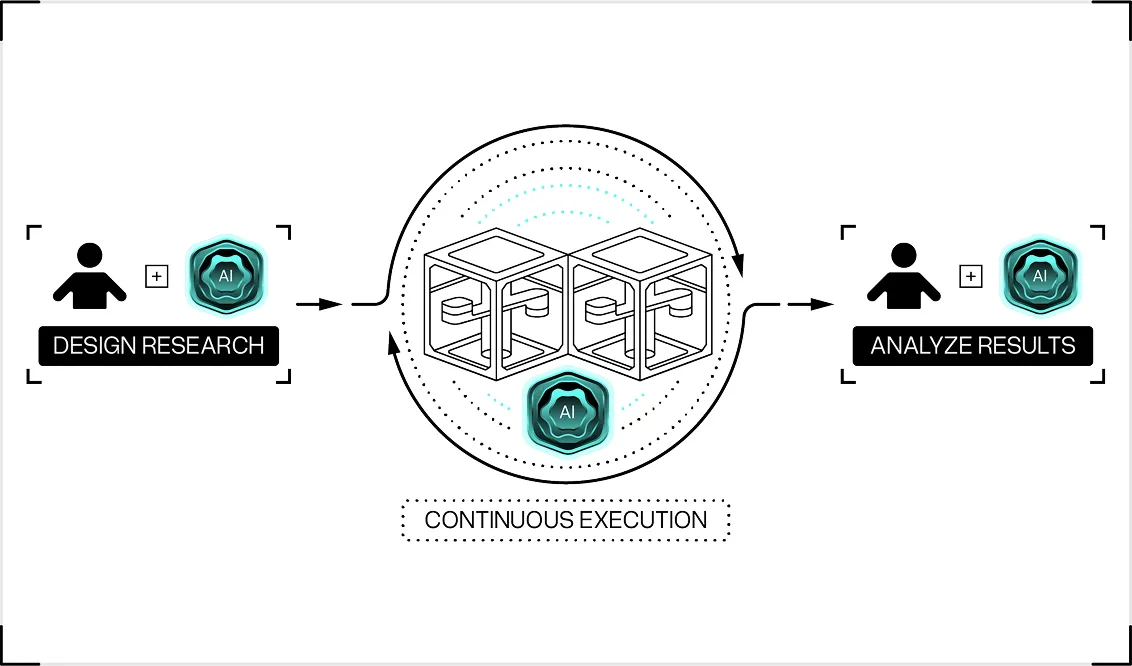
Diagram showing a self-driving lab system designed for fault tolerance and continuous experimental execution
01

Redundancy and error recovery are built in

02

Intelligent correction when conditions shift

03

Enables long-term experimentation at reasonable cost

Self-assembling science

Self-Driving Labs for biology create a continuous research loop: biologists design the protocol, the automation platform executes it, AI adapts the experiment in real time, and AI reviews results to help decide what to do next. This is a new research model that accelerates discovery with every iteration.
SDL

Protocol Design

Walk away

Protocol Modification

Fully autonomous

Sample Layout

Easily designed

Error Checking

Closed-loop AI

Scalability

Integrated

SDL for biology

Protocol Design

Intelligent

Protocol Modification

Fault-tolerant

Sample Layout

Biologically aware

Error Checking

All parameters can be adjusted

Scalability

Standards-based

Book a Demo

Trilobio Self-Driving Lab: Designed to Empower Discovery

Trilobio is building the first SDL platform for biology. It is built by biologists for biologists, with the tools, integrations, flexibility, and scalability that empower biologists to discover more.

01

Built for biologists

Trilobio prioritizes usability, workflows built in the language of biology, and the ability to easily integrate with other critical lab technologies.

02

Rich capabilities out of the box

Automate a wide range of biological workflows with a growing toolkit. The platform capabilities expand over time to support complex experimentation without custom engineering or integration.

03

AI-ready and programmable

Seamlessly integrate with AI models that can design, refine, or optimize protocols in closed-loop experimentation. Biologists can choose when and how to apply AI.

04

Standardized and connected foundation

Standardized protocol languages and SDKs support precise execution and reproducibility. A growing ecosystem extends the Trilobio SDL over the long tail of biological tools and methods. 

05

Scalable by design

Trilobio brings a unique blend of cost efficiency, throughput scalability, and ease of use, making advanced automation accessible to more labs and teams.

Book a Demo

A Complete Platform

for Automated Biology

Trilobio Self-Driving Lab: Designed to empower discovery

Trilobio is building the first SDL platform for biology. It is built by biologists for biologists, with the tools, integrations, flexibility, and scalability that empower biologists to discover more.

01

Built for biologists

Trilobio prioritizes usability, workflows built in the language of biology, and the ability to easily integrate with other critical lab technologies.

02

Rich capabilities out of the box

Automate a wide range of biological workflows with a growing toolkit. The platform capabilities expand over time to support complex experimentation without custom engineering or integration.

03

AI-ready and programmable

Seamlessly integrate with AI models that can design, refine, or optimize protocols in closed-loop experimentation. Biologists can choose when and how to apply AI.

04

Standardized and connected foundation

Standardized protocol languages and SDKs support precise execution and reproducibility. A growing ecosystem extends the Trilobio SDL over the long tail of biological tools and methods. 

05

Scalable by design

Trilobio brings a unique blend of cost efficiency, throughput scalability, and ease of use, making advanced automation accessible to more labs and teams.

Book a Demo
Overview

The Self-Driving
Lab Platform

Trilobio has the only unified robotics, lab device, and software platform architected to integrate with AI and support the needs of biologists. Trilobio supports SDLs out of the box.
Overview
Hardware
Software
AI
Biologist
Book a Demo

The Hardware

The core of the Trilobio Self-Driving Lab platform. The Trilobot and its interchangeable tools put everything biologists need to automate a biology lab in a cube that fits on a standard lab bench.
01
Robot
The robotic arm executes a full range of biological tasks with speed and accuracy. It autocalibrates itself and the plasticware of your lab.
02
Tools
Our industry-first tool-changing system lets the Trilobot automatically swap tools in seconds while executing research. No coding, calibration, or manual setup required.
03
Intermodularity
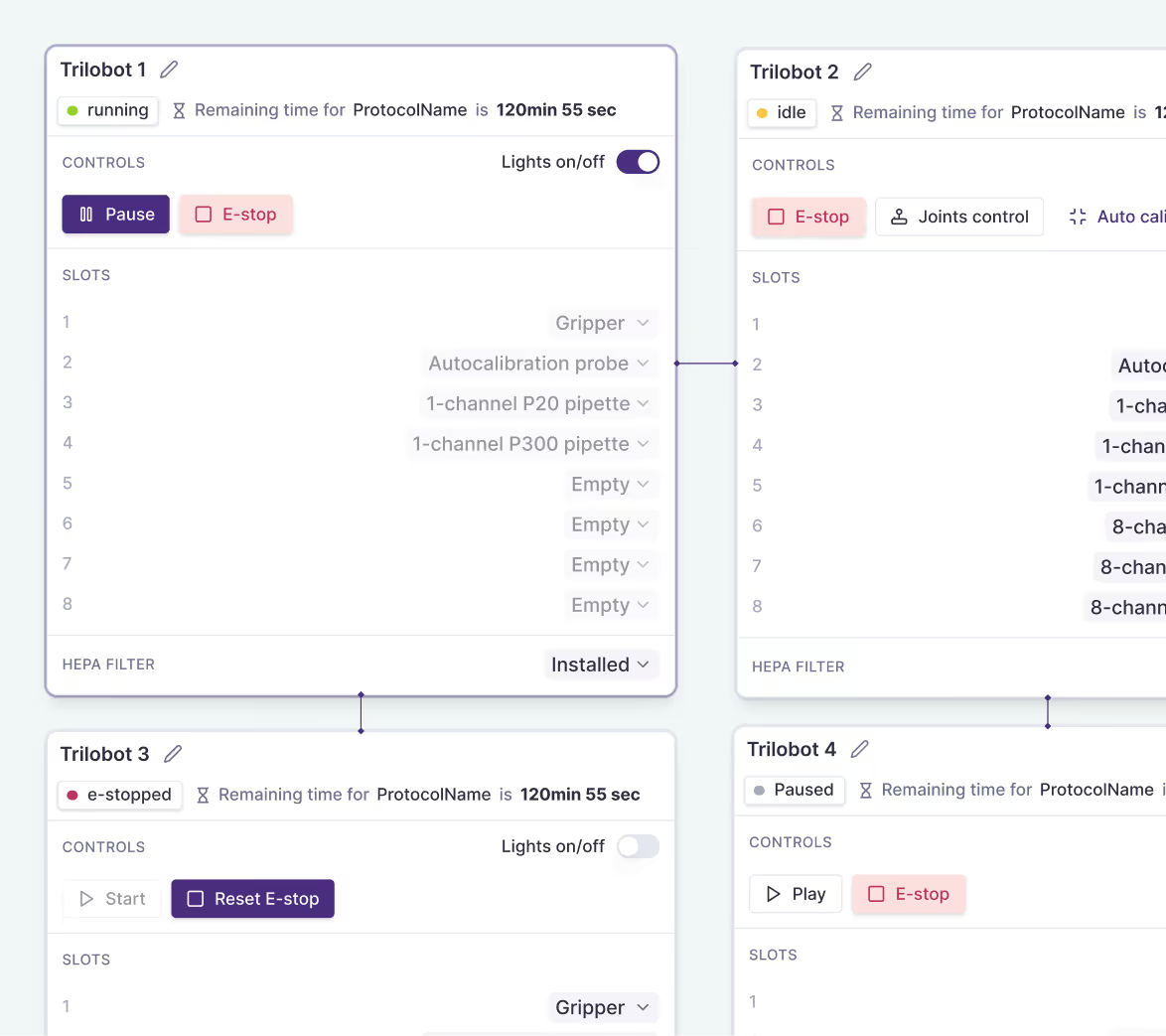
Link multiple Trilobots to expand capacity and throughput. Trilobots automatically recognize each other, calibrate their connection, and share materials without custom integration.

Learn more about the Trilobot

Interface showing multiple Trilobots running, paused, and recovering during automated self-driving lab experiments

The Software

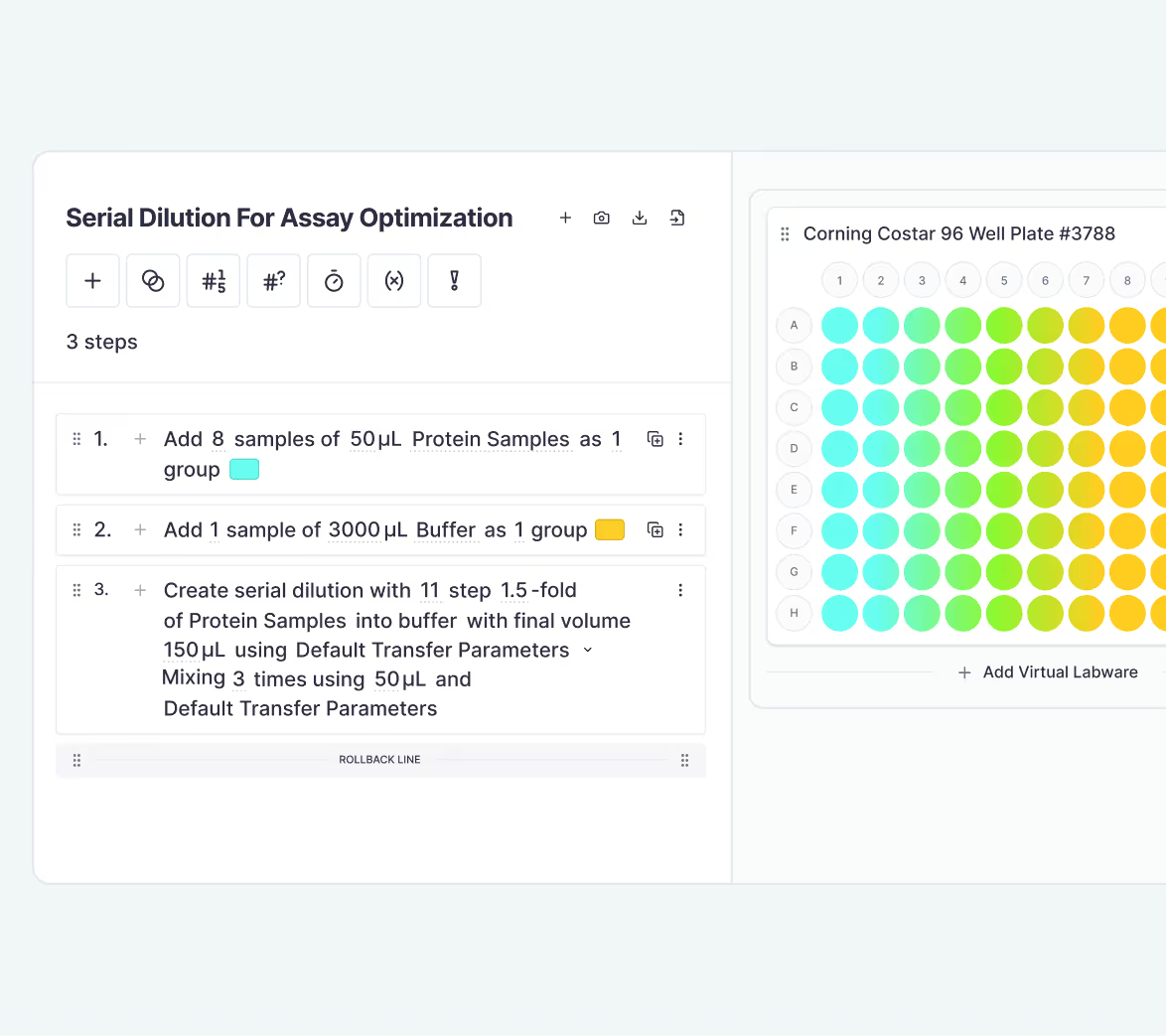
Trilobio OS connects every Trilobot, tool, and labware into a single, intelligent SDL environment. Plan, execute, document, and manage your lab automation with ease.
01
Protocol design
Rapidly build and modify research protocols. Add steps, drag to reorder, and let Trilobio OS handle the details.
02
Automatic sample layout
Trilobio algorithms automatically determine where every sample, plate, and reagent belongs.
03
Custom pipetting & labware
Precise control over liquid handling and labware, from aspiration rate to pipette tip location and plate dimensions.

Learn more about TRILOBIO OS

Trilobio OS interface managing virtual labware and coordinating software control in a self-driving lab

The AI

The Trilobio platform is flexible, intelligent, and extensible. Its hardware, software, and interfaces are AI-ready and designed to fully support SDL experimentation.
01
Direct AI connection
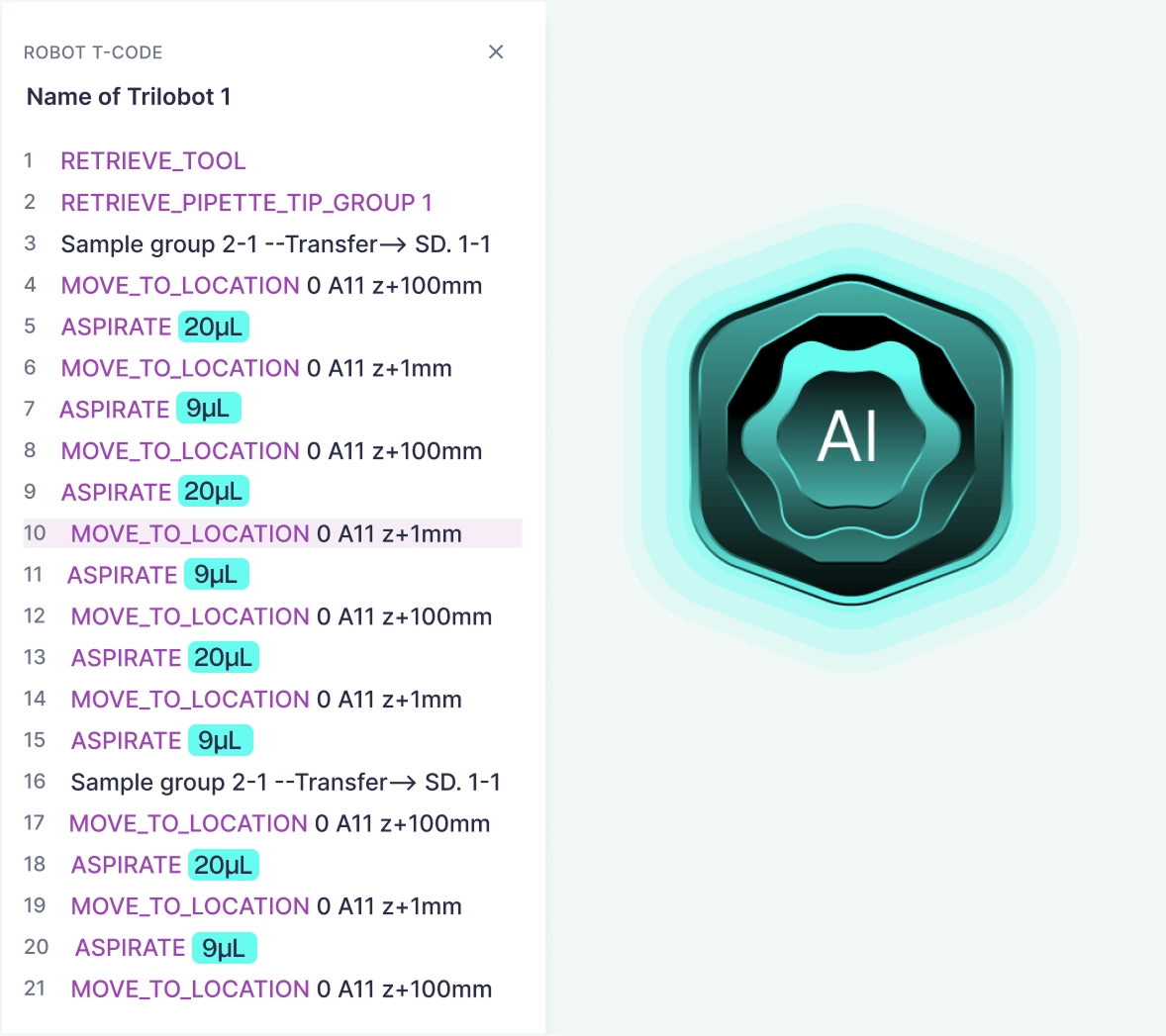
AI discovery models connect directly with Trilobio OS to modify experiment protocols programmatically.
02
Modular hardware
Robots and lab tools can be swapped, utilized, or recalibrated as needed based on AI-directed protocol adjustments.
03
SDKs and APIs
Trilobot machine code and Trilobio OS protocol code are fully accessible for AI and other third-party integrations.
AI system interpreting experimental instructions and guiding robotic actions in a self-driving lab

The Biologist

Trilobio SDLs put the biologist in charge to ensure experiments are executed with the highest levels of quality, efficiency, and safety.
01
Easy setup
Design your experiment and set variables to ensure your Trilobio SDL has everything needed for successful experimentation.
02
Data analysis
Automatically capture rich data during protocol execution for AI learning, human oversight, and results analysis.
03
Total control
The Trilobio SDL is fully under the control of the biologist or team running the experiment.
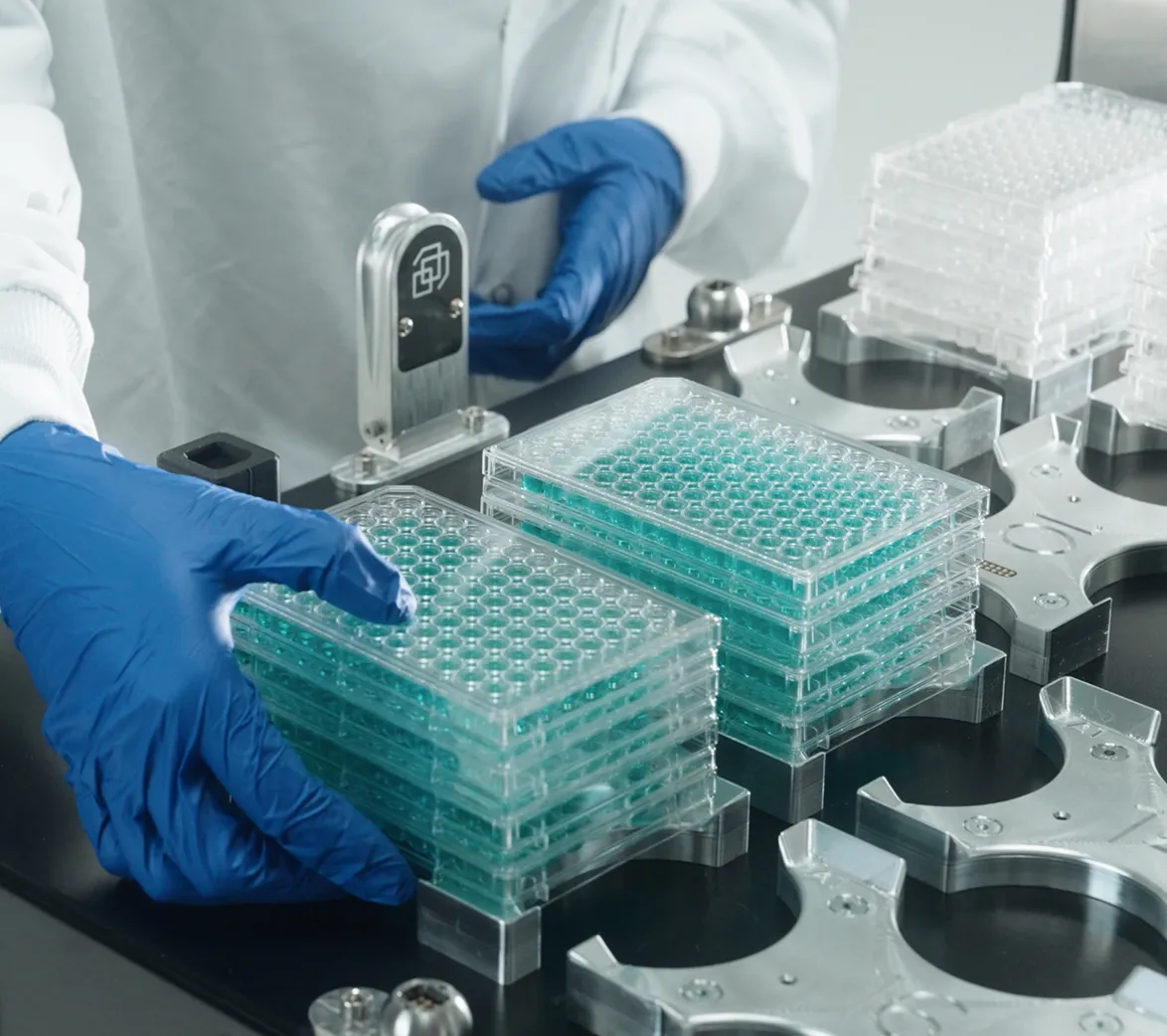
Biologist loading stacked microplates onto a self-driving lab workstation for automated experimentation
DESIGN
Execute
scale

See How the Self-Driving Lab Works

Say goodbye to calibration headaches and weeks of coding. Trilobio is built for biologists, not roboticists.
Book a Demo

Frequently Asked
Questions

Explore how our Self-Driving Lab works, what makes it different, and how it transforms everyday biology workflows.

Book a Demo
What is a Self-Driving Lab for biology?

A Self-Driving Lab (SDL) is a fully automated biology lab that uses AI to conduct closed-loop, iterative experiments. The AI is able to adjust the specifics of the research protocol in order to arrive at a specified goal or end state.

How is a Self-Driving Lab different from an automated lab?

A Self-Driving Lab is different from full automation because it incorporates AI-led discovery into the research process. With the addition of AI, Self-Driving Labs can lead to an explosion of data production, discoveries, and biology breakthroughs.

Do Self-Driving Labs for biology require unique capabilities?

Self-Driving Labs for biology have unique requirements based on the materials with which they experiment. Biology SDLs must be biologically aware and understand the properties of the reagents, cells, and other biological matter used in the experiment, and be able to adapt to factors like evaporation and material suspension over long periods of time.

What are the different components of a Self-Driving Lab?

Self-Driving Labs are composed of the robotic and lab device hardware that physically execute the experiment and collect important data, software that communicates the research protocol to the hardware and organizes the data, AI that helps design the protocol and iterates on the protocol steps in a closed-loop, and the human biologist who sets the goals of the research and provides a final validation at the end of the experiment.

How does AI work within a Self-Driving Lab platform?

AI is the intelligence that creates the closed-loop discovery engine of the SDL. AI models for biology discovery are able to collect and analyze data during and after research protocol execution. With this information, the AI can determine new steps to take during the experiment or design an entirely new experiment based on the final results of the previous one.

What types of lab automation software does a SDL use?

The most important types of lab automation software used in SDLs are research protocol design and execution software, robotics control software, LIMS systems, and AI biology discovery models.

Powerful, reliable lab
automation you can afford
Robot
Tools
Software
Ecosystem
Customers
Blog
Company
Book a Demo
Get the latest research insights, product updates, and application tips.

By providing this information, you agree to be kept informed about Trilobio products and services.

Thank you! Your submission has been received!
Oops! Something went wrong while submitting the form.
Privacy Policy
Terms of Service
© 2025 Trilobio. All Rights Reserved.
Made by tonik