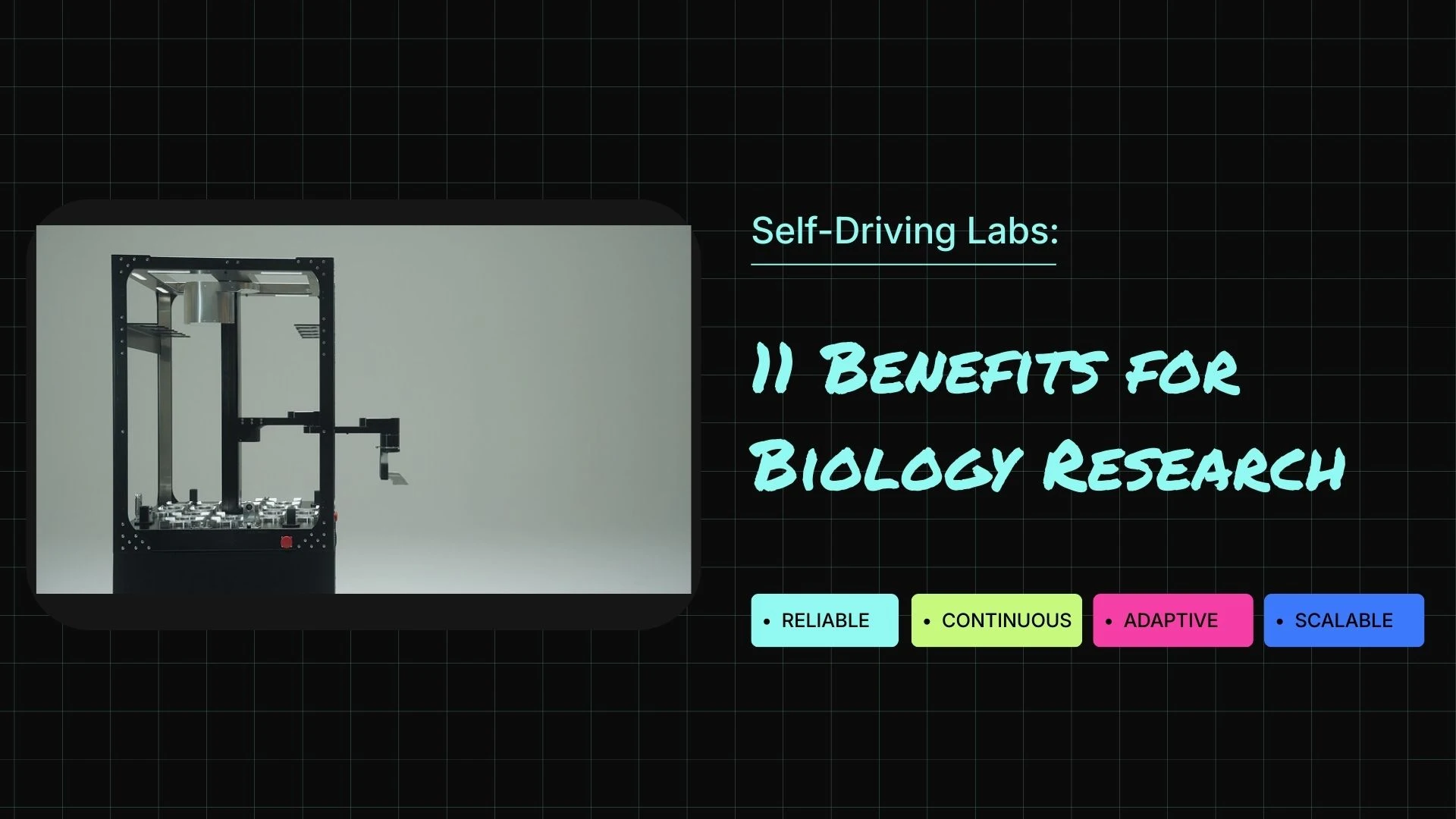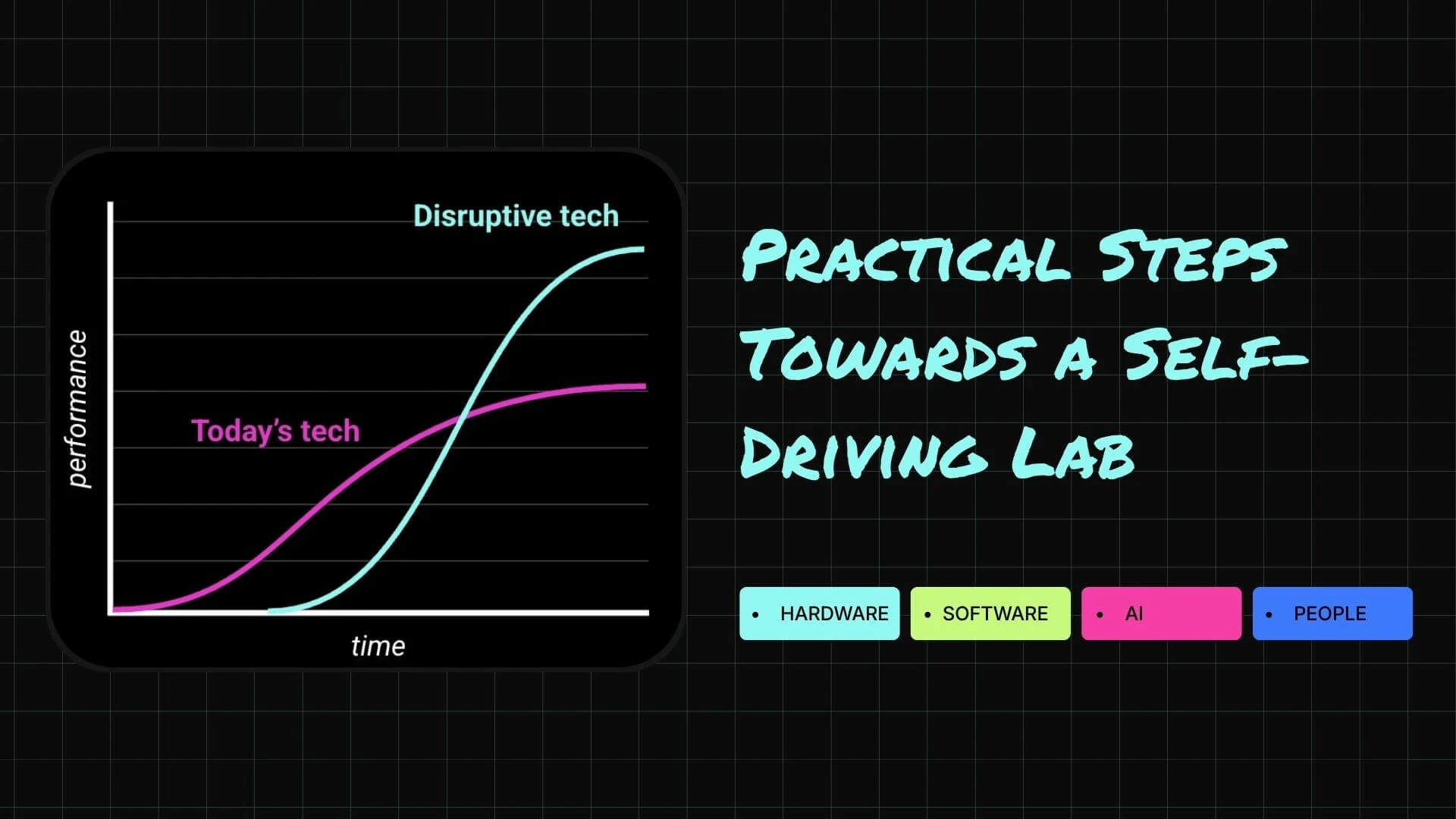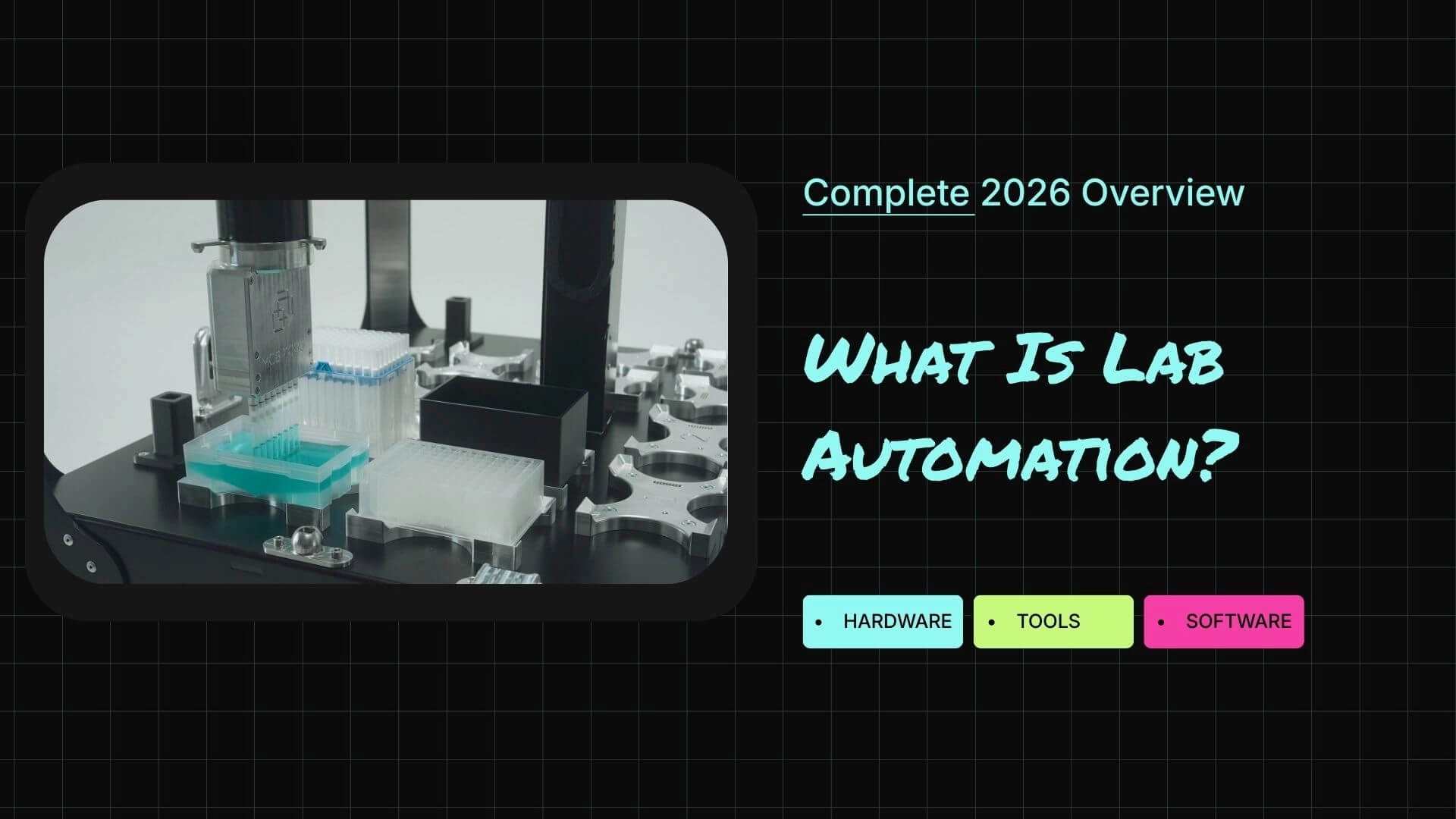
To outsiders, a “biology lab” is often used as a generic term, but biologists know every lab is different. The same biology (e.g. molecular biology, genetic engineering, microbiology) can be executed in fundamentally different lab environments, and those differences shape the accuracy, speed, and results of the research.
In one lab, someone is pipetting 96-well plates by hand and shuttling samples between different lab devices. In another, robots are moving plates between automated instruments while software logs the growing stream of data. And in a third, experiments are being run, analyzed, and redesigned without anyone interacting with or monitoring the equipment. All three are technically “doing lab work,” but they are each operating at different levels of automation (including no automation at all!).
Most teams want to automate more of their biology, but “lab automation” has become an umbrella term that spans everything from partially automated workflows to fully autonomous experimentation. That breadth can make it difficult to understand where you are today and what you should build toward next.
- Manual labs
- Automated labs (including partially and fully automated labs)
- Self-Driving Labs (SDLs)
Let’s look at each lab type—along with examples, strengths, and weaknesses.
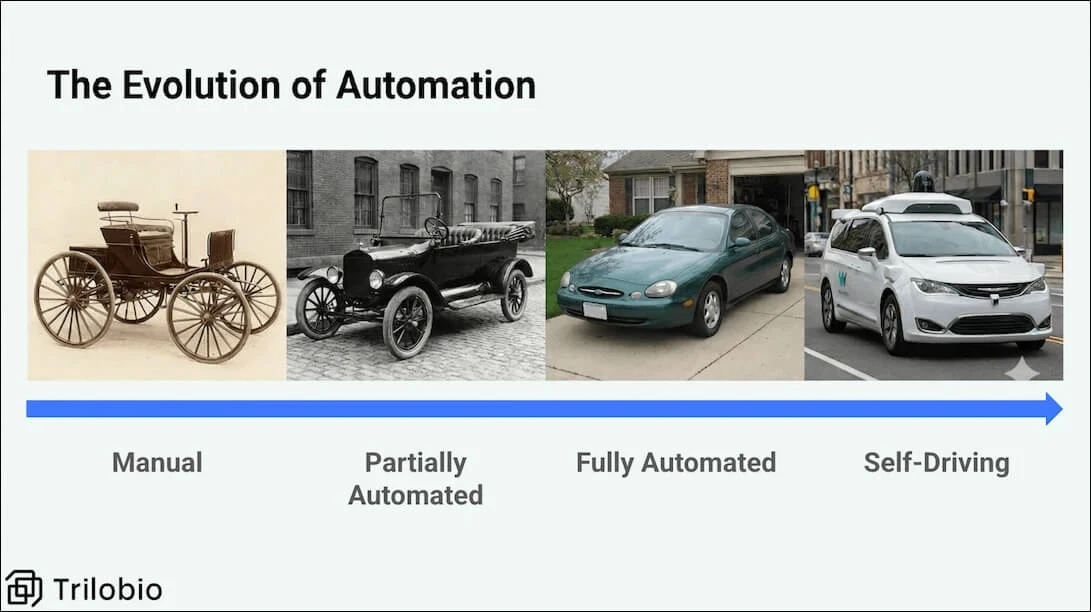
The Manual Lab
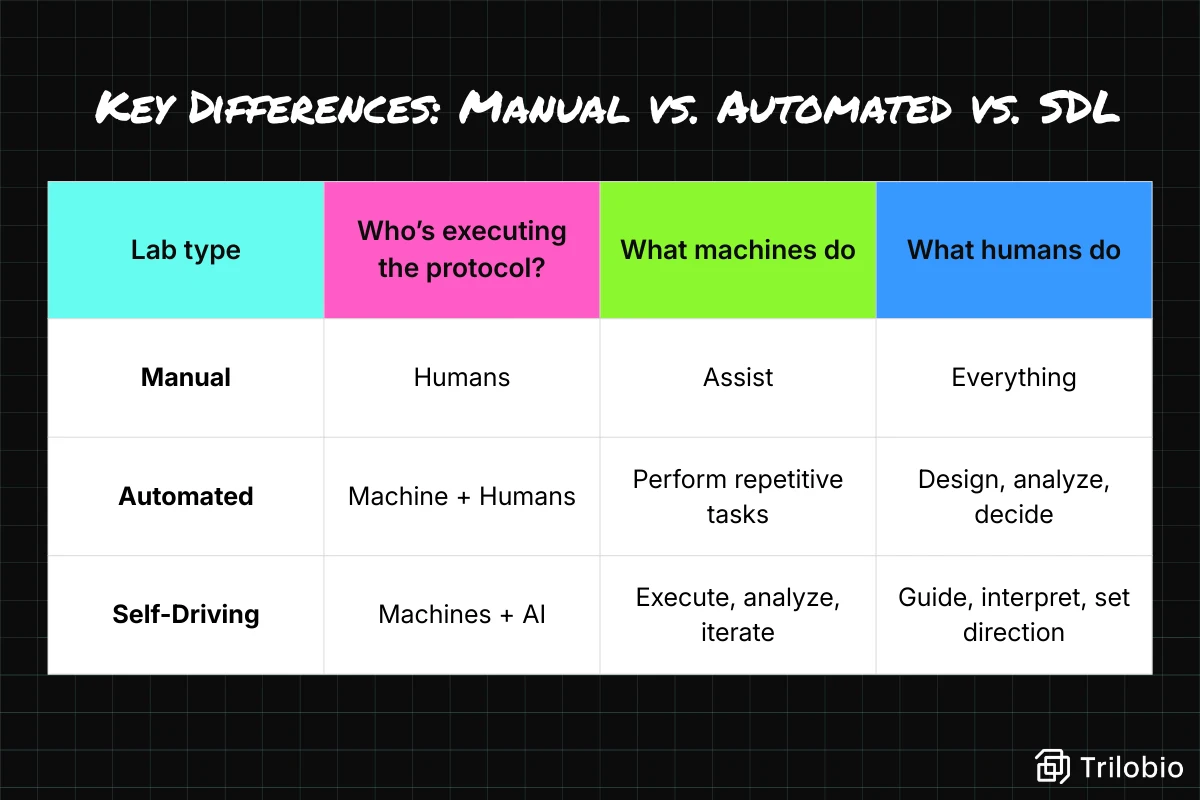
Most biologists today got their start in a classic manual lab setup. Humans do everything: prep reagents, pipette samples, move plates between instruments, time incubations, write notes, organize data, and try to flawlessly execute every single protocol. The human is the operating system of the lab. The instruments are there, but they function more like appliances rather than systems—nothing happens unless a scientist is actively making it happen.
Examples of manual lab tasks
If you’ve spent any time at a bench, these will feel very familiar. This is the day-to-day reality of how experiments get done when scientists are responsible for every step.
- Pipetting an entire plate by hand
- Scribbling protocol changes into the margins of a lab notebook mid-experiment
- Exporting data from an instrument and reformatting it in a spreadsheet
- Setting timers on your phone for incubations
Why this setup still works
There are real pros to manual labs, which is why so many still operate this way today. For certain types of research, doing everything by hand may feel simpler, more flexible, and easier to adjust in the moment.
- Relatively low upfront cost (probably the biggest one)
- No complex setup, integration, or training required
- You understand every step because you physically did every step
- Works well for early exploration, one-off experiments, or R&D
Where this starts to break down
The cons of manual labs show up in very real ways. The moment you need experiments to run faster, more often, or with better consistency, doing everything by hand creates a bottleneck.
- Limited throughput is tied to how fast a person can physically work
- Experiments stop when people leave for the day
- Small variations in technique introduce inconsistency between runs
- Hard to reproduce results exactly across people, days, or labs
- Data handling is manual, slow, and prone to error
Manual labs can do great science; they have for decades. But the pace of discovery is limited by how fast a person can physically work, which is not a great long-term strategy.
The Automated Lab
Automation started showing up in labs in a meaningful way in the late 1980s and 1990s, when high-throughput screening and large-scale genomics work made it clear that some parts of lab work shouldn’t be done by hand anymore.
Lab automation spans a wide range—from small integrations where two instruments work together to automate part of a workflow, to fully automated systems that execute entire experimental processes end-to-end. In general, humans design the experiments, start the runs, interpret the data, and decide what happens next. The robots take care of the repetitive steps, while researchers manage everything that happens around them (and quietly appreciate not pipetting 10,000 wells themselves!).
Examples of automated lab tasks
From liquid handlers pipetting full plates to robotic arms moving samples between instruments, lab automation has reshaped how labs operate. Automation allows scientists to drastically increase data production and decrease the time spent executing the repetitive tasks of the biology lab.
- Using liquid handlers to dispense and fill plates with consistent, repeatable precision
- Robots or grippers transferring plates and samples between instruments without human handling
- Tracking samples, reagents, and consumables through a centralized LIMS instead of spreadsheets or labels
- Instruments and tools that automatically calibrate themselves and their labware
- Walkaway runs where setup, execution, and measurement happen without someone standing nearby
Why this setup works
There are real pros of automated labs, which is why so many modern facilities invest heavily in them. When repetitive tasks move to machines, labs can run more experiments with better consistency, improved accuracy, and far less physical effort from researchers. This frees up biologists’ time to focus on other pressing needs related to their research.
- More experiments can run in less time, including overnight and on weekends
- Repetitive steps are handled with far fewer errors than when done by hand
- Standardized execution makes results easier to reproduce within and across labs
- Scientists spend less time doing repetitive tasks and more time designing and interpreting experiments
- Less variability means fewer failed runs, less wasted reagent, and fewer do-overs
- Workflows naturally produce structured data and metadata without adding extra effort
Where this starts to break down
Even though moving to full automation can drastically improve throughput, accuracy, and consistency, it introduces new challenges that biologists should be aware of.
- Some setups end up locked into a single configuration, vendor, plasticware type, or instrument, which limits flexibility
- Systems can be expensive, and choosing the wrong one for your needs is a costly mistake
- Shifting from manual work to automation requires new skills and can feel disruptive
- People have to learn a new way of working, and that takes time and patience
While a room full of robots is impressive, automation alone does not make a lab autonomous.
The Self-Driving Lab (SDL)
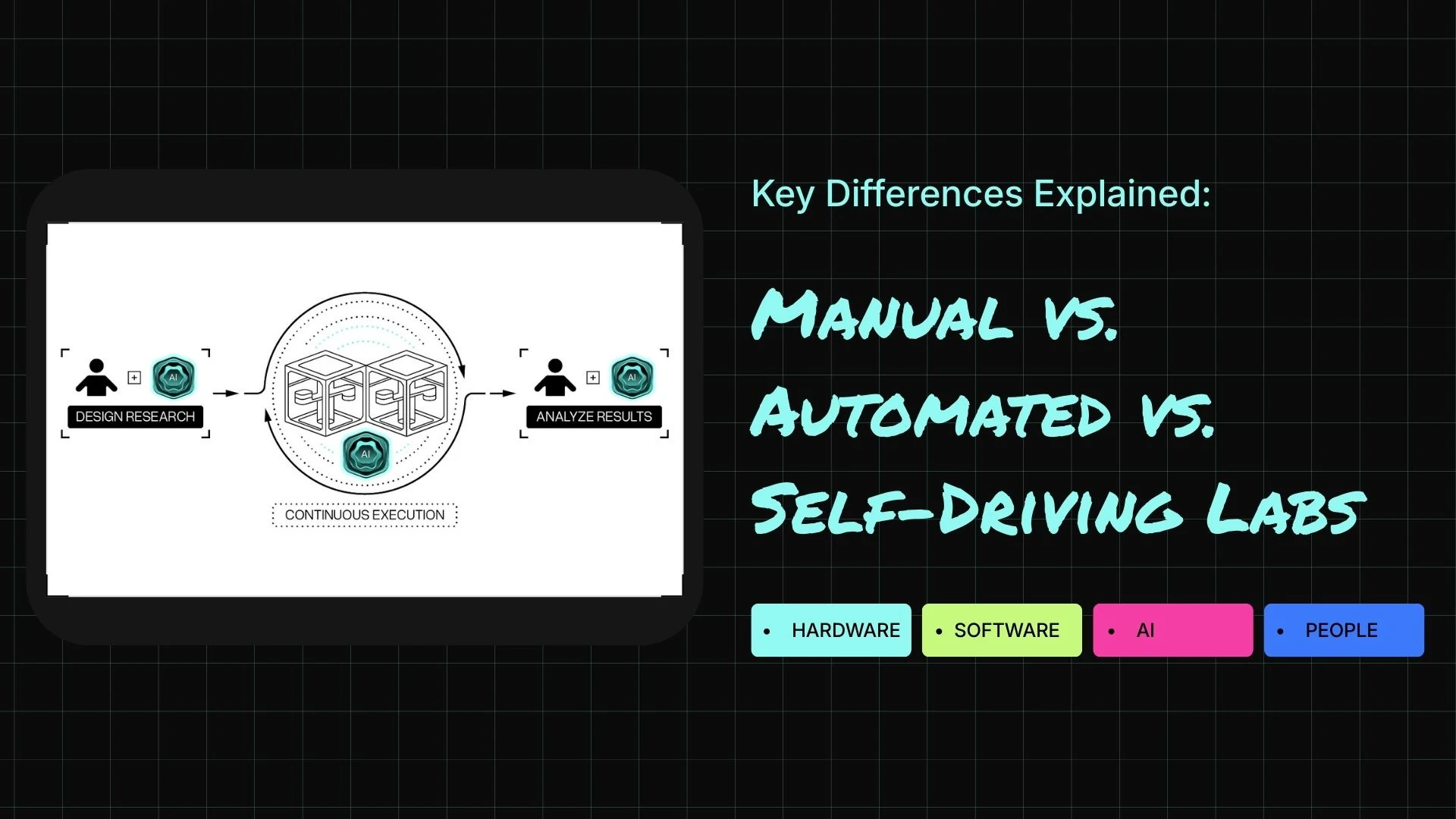
In a Self-Driving Lab (also known as autonomous labs), full automation hardware, orchestration software, and Artificial Intelligence form a closed-loop experimentation engine that can run for long periods of time, adapt protocols as data emerges, and accelerate discovery in ways traditional automation never could. Humans still set the goals and interpret results, but within and between runs, the system learns and iterates without human intervention.
Examples of autonomous labs in action:
- Instead of executing hard-coded steps, the lab continuously adapts and evolves experiments as new data arrives
- Robots, instruments, and software working together in a fully integrated platform
- AI adjusting experimental parameters like timing, volumes, and conditions mid-run
- Instruments running for days or weeks with built-in fault tolerance
- Rich experimental data collected in real time for both AI learning and human review
- Results packaged and returned to the biologist for high-level insight and next move
The benefits of autonomous labs
SDLs might seem like science fiction, but they are closer than you might think. They have the potential to revolutionize the field of biology by combining full automation with closed-loop learning. SDLs let the lab keep moving, learning, and iterating on its own.
- Experiments run continuously without human intervention
- AI steers the next steps based on live data, not just pre-set protocols
- Longer, more complex research becomes feasible
- High-quality, structured data is collected automatically
- Scientists can focus on interpretation, strategy, and breakthrough ideas
The challenges of running an SDL
The cons of Self-Driving Labs show up mostly in the setup and integration, not the operation itself. A true SDL needs hardware, software, and AI to talk to one another and adapt to biological realities, and that takes architecture, planning, and intentional design.
- Integrating robots, lab instruments, and software into a single system can be difficult, unless you start with the right setup
- Requires an AI layer that can interpret and act on data mid-experiment
- Higher upfront planning and infrastructure investment
- Demands new ways of thinking about protocols and closed-loop learning
- Not every lab’s current workflows or equipment are ready for this leap
How Trilobio lowers the barrier to autonomous labs
The challenges of running an SDL are architectural, not incidental. Running an autonomous lab requires hardware, software, and AI designed to operate as a unified system of biological experimentation without human intervention. The Trilobio platform was built to make this a reality.
- Built for biologists (not software engineers or roboticists): Trilobio prioritizes usability and workflows built in the language of biology, making it possible to integrate and run advanced automation without requiring deep robotics or software expertise.
- Rich capabilities out of the box: A wide range of biological workflows can be automated immediately, with platform capabilities that expand over time to support increasingly complex experimentation without custom engineering.
- AI-ready and programmable: The Trilobio platform can integrate with AI models that design, refine, and optimize protocols in closed-loop experimentation, while allowing biologists to determine when and how AI is applied.
- Standardized and connected foundation: Standardized software and hardware interfaces enable consistent execution and reproducibility, while supporting integration across a wide range of instruments.
- Scalable by design: Trilobio combines cost efficiency, increasing throughput capacity, and operational accessibility, making advanced automation affordable for more labs and research teams.
From Pipetting by Hand to Labs That Learn on Their Own
For a long time, biology moved forward because someone stood at a bench and did the work carefully, one step at a time. The arrival of automation technologies helped labs run more experiments with better consistency and reproducibility. Now, Self-Driving Labs will shift the focus again, from how fast experiments can be executed to how fast labs can learn from the data and adapt their protocols.
At this point, the real bottleneck in biology isn’t whether a plate can be pipetted quickly or a run can be scheduled overnight. It’s how long the lab sits idle between experiments. The labs that close that gap—the ones that move from manual work, to automated execution, to continuous learning—are the ones that will quietly outpace everyone else.
Sign up for the latest insights and updates.
By providing this information, you agree to be kept informed about Trilobio’s products and services.