Self-Driving Labs (SDLs) are quickly changing everything about biology research.
I spent over a decade in biology labs before co-founding Trilobio, and I watched the same problem play out over and over. Brilliant scientists spending their mornings pipetting 96-well plates. Afternoons lost to transferring samples between instruments. Evenings spent checking on incubations that a timer and a protocol already predicted would be fine. While the science was interesting, the execution was inconsistent, error-prone, and exhausting.
Research has always moved at the speed of human hands. Self-Driving Labs are designed to change that.
What is a Self-Driving Lab?
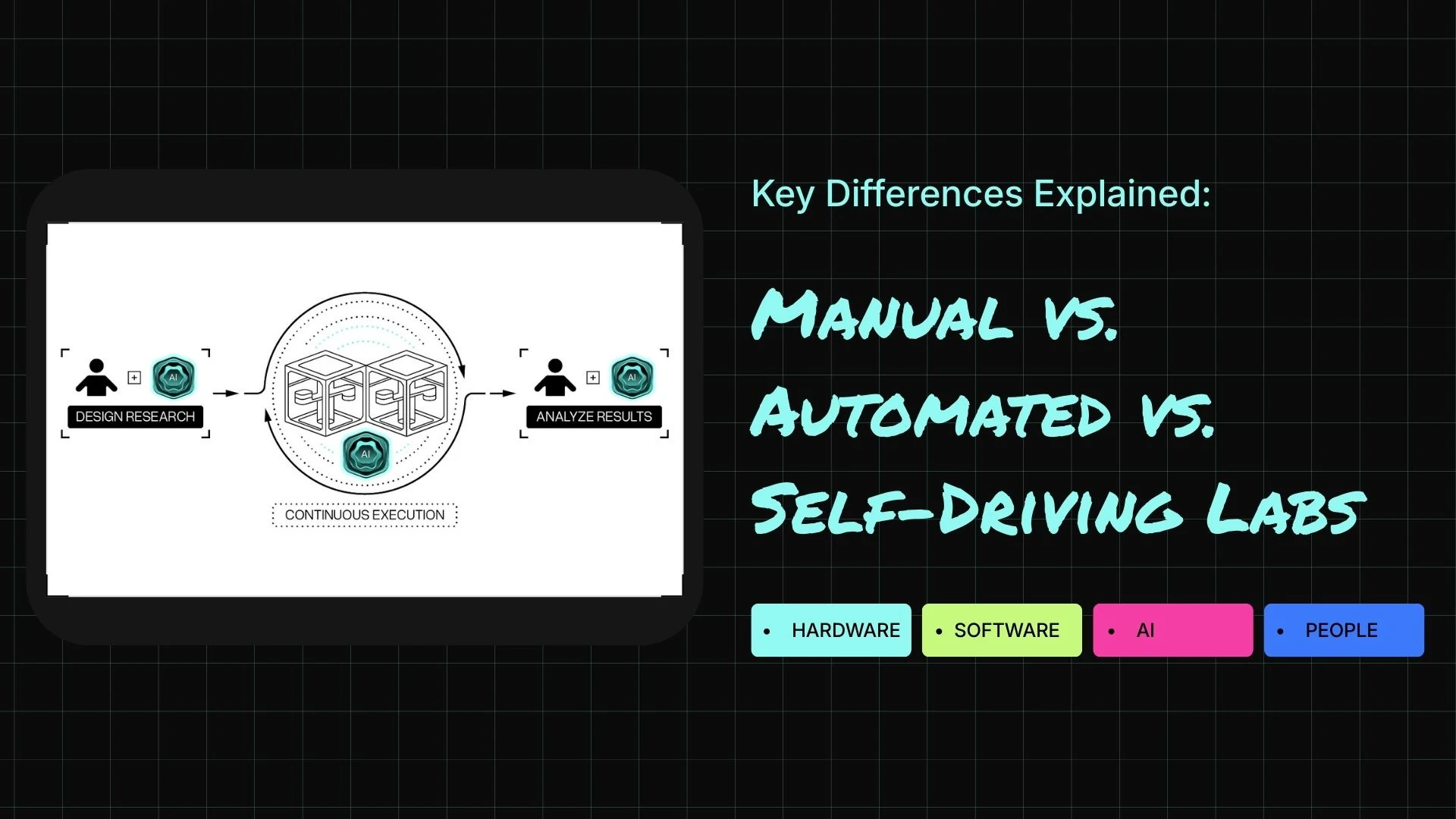
A Self-Driving Lab (SDL)—also called an autonomous lab—is a closed-loop system where robotics, software, and AI work together to design, execute, monitor, and iterate on experiments without human intervention. Instead of scientists spending their time manually executing experiments, they can spend their time designing better ones.
SDLs positively impact efficiency, throughput, and scientific output in ways that compound over time. Here's a concrete look at what that means in practice for research teams.
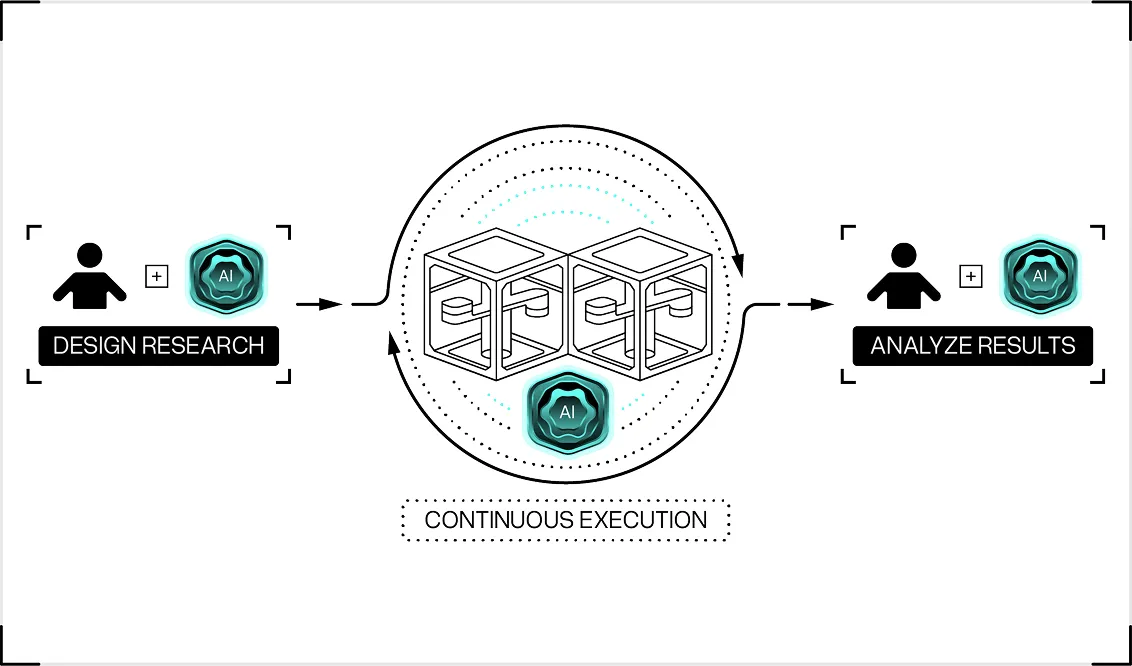
Benefits of Self-Driving Labs for biology research
Self-Driving Labs are still early. Most biology labs haven't run one yet, and the ones that are building toward autonomous operation are doing so carefully, one workflow at a time. The benefits below aren't retrospective; they're a map of what’s possible with SDLs.
1. Experiments can run without constant hands-on execution
Many lab workflows involve steps that require precision and consistency, but not active scientific decision-making. Pipetting, plate transfers, timing management, and moving materials between instruments: these are execution tasks, not science tasks. In a Self-Driving Lab, they're automated end-to-end. Protocols are defined once and run consistently, overnight and through weekends, without someone standing at the bench.
2. Scientists spend less time on repetitive execution
Highly trained biologists are underutilized when they're spending half their day pipetting. SDLs shift that effort toward experimental design, results interpretation, and hypothesis generation. At Trilobio, we hear this consistently: when scientists stop spending their mornings on sample prep, they get to spend them moving the field of biology forward.
3. More experiments can run at the same time
In most labs, parallelization is constrained by how many things one person can manage simultaneously. This usually means not a whole lot! SDLs remove that constraint. Scheduling is coordinated by software, instruments operate closer to full utilization, and multiple experiments run concurrently without the coordination overhead that normally limits throughput.
4. Experiments are executed the same way every time
Reproducibility is one of the most persistent challenges in biological research. It’s not because scientists are careless, but because manual execution introduces variation—even a transposed digit in a lab notebook can make an experiment impossible to reconstruct six months later. (Yes, I’ve seen it happen!)
With the Trilobio platform, each step is defined once and runs identically every time. Timing is controlled, instrument outputs are captured automatically, and the complete experiment history is recorded without anyone having to write it down.
5. Each experiment has a complete digital record
Research normally ends up scattered across notebooks, spreadsheets, and instrument export files. SDLs automatically generate a unified digital record—protocol versions tracked, step timing recorded, instrument outputs linked to the run that produced them, iteration history preserved. For labs building institutional knowledge or supporting regulatory compliance, that's invaluable.
6. Experimental results feed directly into the next run
In manual workflows, data analysis happens after an experiment completes—a process that can take days, if not weeks. In a Self-Driving Lab, data is captured continuously, and AI evaluates results as experiments progress. The system, in collaboration with the scientist, identifies trends early and informs what comes next.
7. Experiments adapt when biological conditions change
Biological systems change over time. Cultures grow, media evaporates, temperature drifts. Traditional automation executes against a fixed schedule, which works for short protocols but breaks down for anything more dynamic. SDLs are biologically aware, monitoring changing conditions in real time and adjusting accordingly.
8. Protocols can change as data emerges
Most protocols are fixed before experiments begin. Autonomous labs don't have this limitation—AI can update timing, volumes, reagent concentrations, and decision branches as results emerge, within and across experiments. It's not just that experiments run faster. The iteration cycle—observe, hypothesize, test—runs faster.
9. Experiments run continuously without interruption
Long-running experiments are vulnerable to unexpected deviations. Self-Driving Labs are designed around the expectation of variability, with built-in fault tolerance so experiments run without requiring human intervention to troubleshoot or restart.
10. Protocols run consistently across teams and sites
Transferring a workflow between scientists or sites is harder than it looks when execution depends on individual techniques. SDL protocols defined in software produce equivalent results regardless of who's running them or where, which matters for biotech companies scaling across sites and academic labs collaborating with industry partners.
11. Experimental data can be used to guide future experiments
It is critical for labs to generate data in a format that supports AI model development, but capturing structured data during manual execution is genuinely difficult. Self-Driving Labs produce structured, well-annotated experimental data as a natural byproduct of operation. Over time, that data trains models that improve experimental design, gradually shifting the SDL from reactive automation toward genuinely predictive research.
SDLs: A different way to do biology
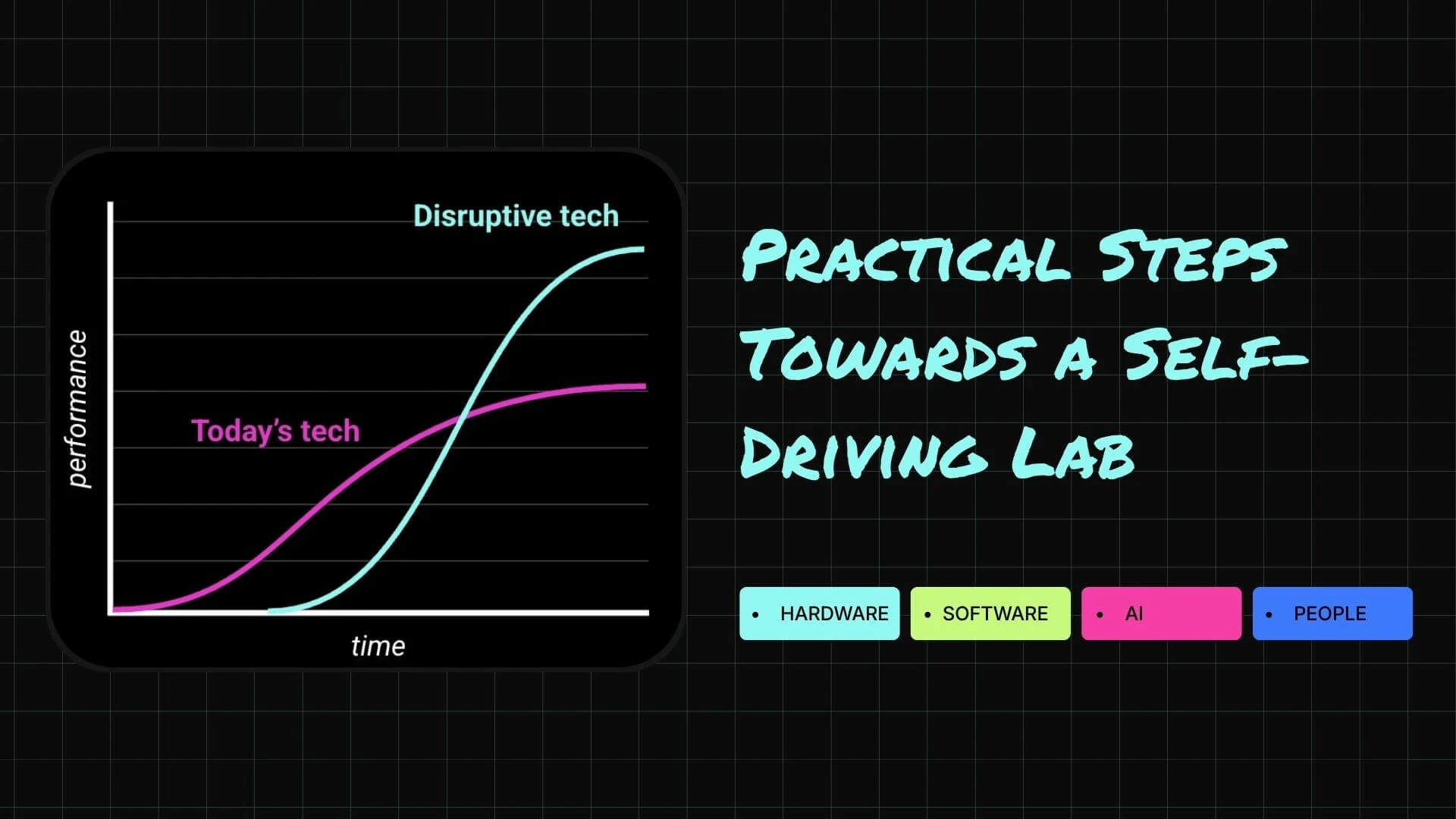
While there are many benefits to SDLs, the transition from manual workflows to autonomous lab operation is a process, not a flip of a switch. But the benefits to biology are clear: The labs moving toward Self-Driving infrastructure today will have more data, better reproducibility, and faster iteration cycles tomorrow.
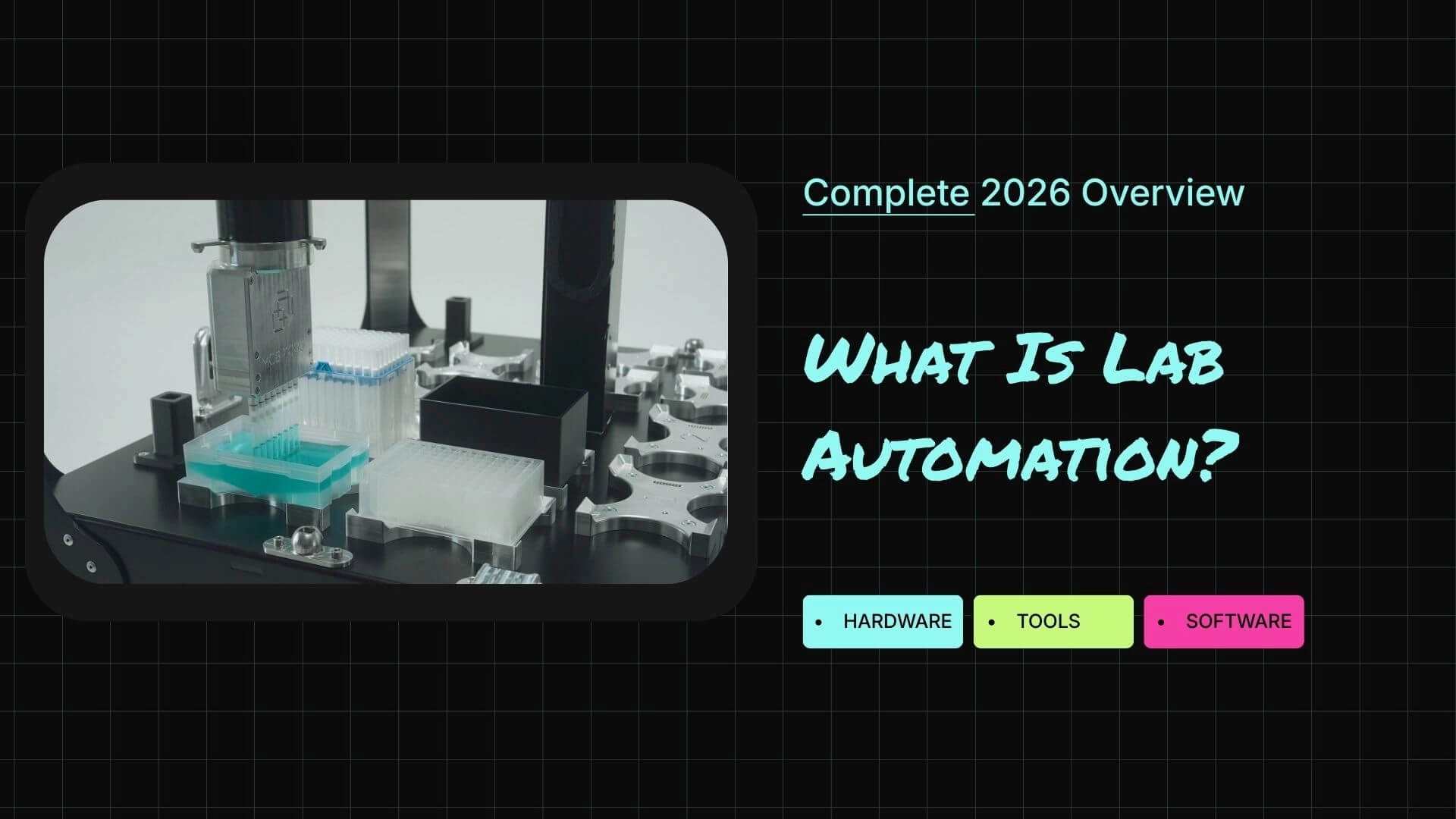
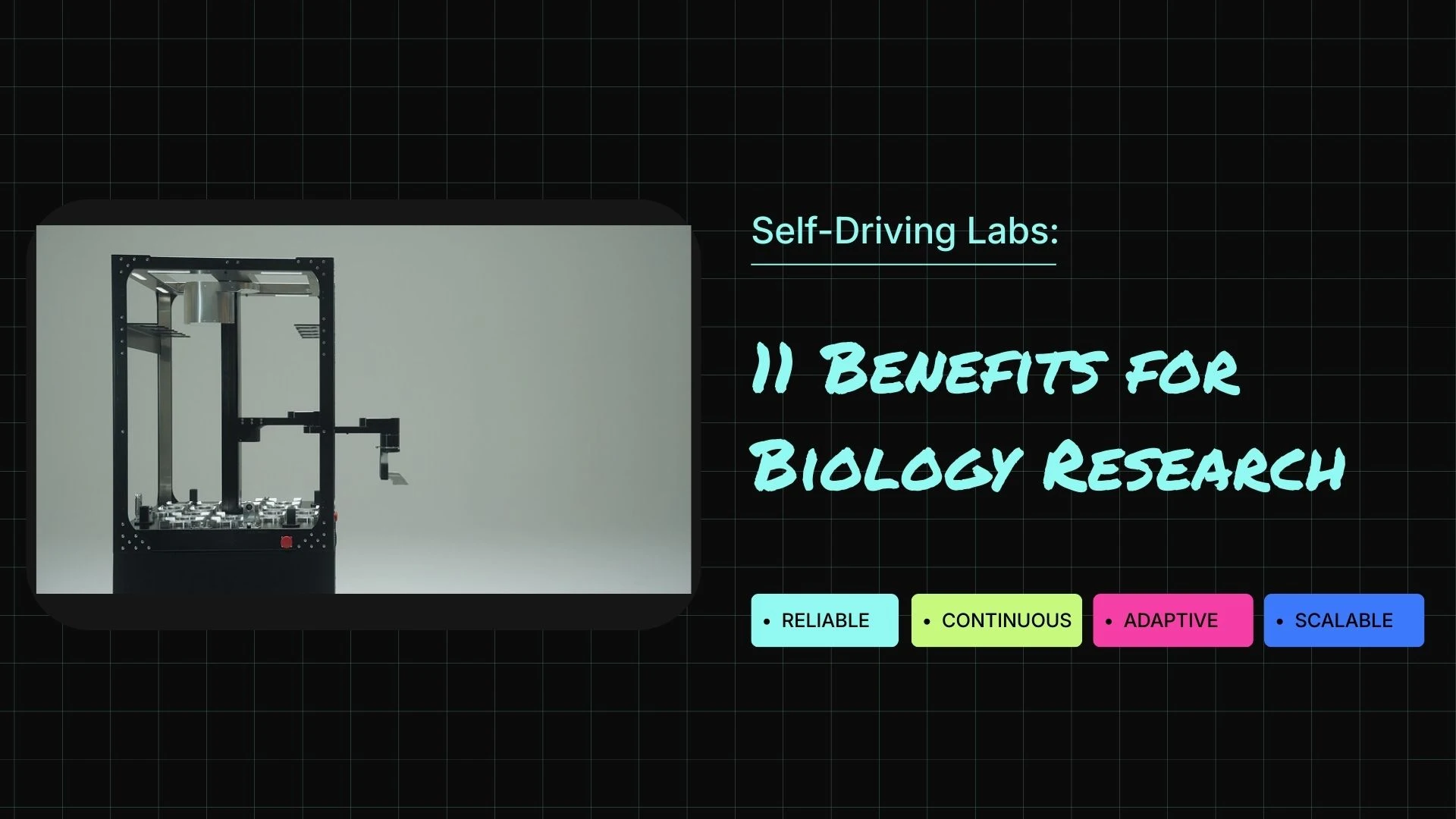
At Trilobio, we’re building SDLs around four pillars: hardware, software, AI, and people. The Trilobot handles physical execution, like liquid handling, tool-changing, and plate management. Trilobio OS manages protocol design and coordination. AI closes the loop between data and decisions. The scientist directs the research goals and execution throughout. Together, these pillars make something amazing possible: science that is biologically aware, fault-tolerant, and self-assembling—adapting with every iteration rather than waiting for human intervention between runs.
Ready to explore what a Self-Driving Lab looks like in practice? Book a demo with the Trilobio team.
Sign up for the latest insights and updates.
By providing this information, you agree to be kept informed about Trilobio’s products and services.